
Home Tech Land is reader-supported. When you buy through links on our site, we may earn a commission. As an Amazon Associate, we earn from qualifying purchases.
Last updated: . How we research: We compare manufacturer specs with published lab measurements and owner reports; we don’t test products in person. Learn more about Home Tech Land.
The Razer Viper Mini Signature Edition is one of the strangest and most expensive gaming mice ever made, and in 2026 it makes the most sense as a collector’s piece rather than a performance buy. Razer machined its shell from magnesium alloy, cut it into an open honeycomb exoskeleton, and got the whole wireless mouse down to just 49 grams. It launched in February 2023 at $279.99, roughly double the price of most flagship esports mice. This Razer Viper Mini Signature Edition review explains what you get for that money, how it performs according to expert reviewers and owners, whether you can still buy one, and which lighter, cheaper wireless mice on Amazon make more sense for most gamers in 2026.
Quick verdict: The Viper Mini Signature Edition pairs a rigid metal shell, a top-tier sensor, and true 4,000 hertz (Hz) wireless polling in a tiny, featherweight body. It’s a collector’s piece for enthusiasts with small to medium hands. Most players will get similar in-game performance from a $60 to $160 mouse, and Razer only sold it in limited production runs, so new units are now hard to find. Check the Razer Viper Mini Signature Edition price on Amazon.
Key takeaways
- What it is: A 49-gram wireless gaming mouse with a magnesium alloy shell, the Razer Focus Pro 30K sensor, and up to 4,000Hz wireless polling.
- Who it’s for: Collectors of premium peripherals with small to medium hands who use a claw or fingertip grip.
- Price: It launched in February 2023 at $279.99, and as of November 2026 you’ll mostly find it through resellers and secondhand marketplaces, often near or above that price. Prices change often.
- Main weaknesses: Right-handed side buttons only, an open shell that collects dust and offers little spill protection, and battery life that drops noticeably at 4,000Hz.
- Status: Razer built it in small batches for Razer.com, so new units are hard to find; the 54-gram Razer Viper V3 Pro supports 8,000Hz polling and typically sells for about $160.
Razer Viper Mini Signature Edition at a glance
| Spec | Razer Viper Mini Signature Edition |
|---|---|
| Release date and launch price | February 2023, $279.99 manufacturer’s suggested retail price (MSRP) |
| Weight | 49 grams (1.72 ounces) |
| Dimensions | 119 x 62 x 39 millimeters (4.68 x 2.44 x 1.53 inches) |
| Shell | Computer numerical control (CNC) machined magnesium alloy exoskeleton |
| Sensor | Razer Focus Pro 30K optical sensor, up to 30,000 dots per inch (DPI), 750 inches per second (IPS), 70 times the force of gravity (70 G) acceleration |
| Switches | Razer Optical Mouse Switches Gen-3, rated for 90 million clicks |
| Wireless | Razer HyperSpeed with the included HyperPolling dongle, up to 4,000Hz polling |
| Wired | Universal Serial Bus Type-C (USB-C) cable |
| Battery | Up to 60 hours; full charge in under 90 minutes |
| In the box | HyperPolling dongle, Corning Gorilla Glass 3 mouse feet, grip tape set, microfiber cloth, alcohol prep pads |
| Warranty | Three years |
Specs come from Razer’s launch announcement and Windows Central’s review.
Can you still buy the Razer Viper Mini Signature Edition?
Razer never called the Signature Edition a limited edition, but it built the mouse in small batches and sold it exclusively on Razer.com in periodic drops, starting February 11, 2023. Stock has been sparse ever since, and owners on the Razer Insider forum have repeatedly asked about restocks. Today you’ll mostly find it through resellers and secondhand marketplaces, often near or above its launch price. Check the official Razer product page first, and inspect used listings carefully for worn feet, missing accessories, or a missing dongle.
If you just want a light, fast wireless mouse rather than a metal collectible, skip ahead to the comparison section. Razer and Logitech now sell flagship mice that weigh 54 to 60 grams for around $160, and budget models that cost far less.
Design and build quality
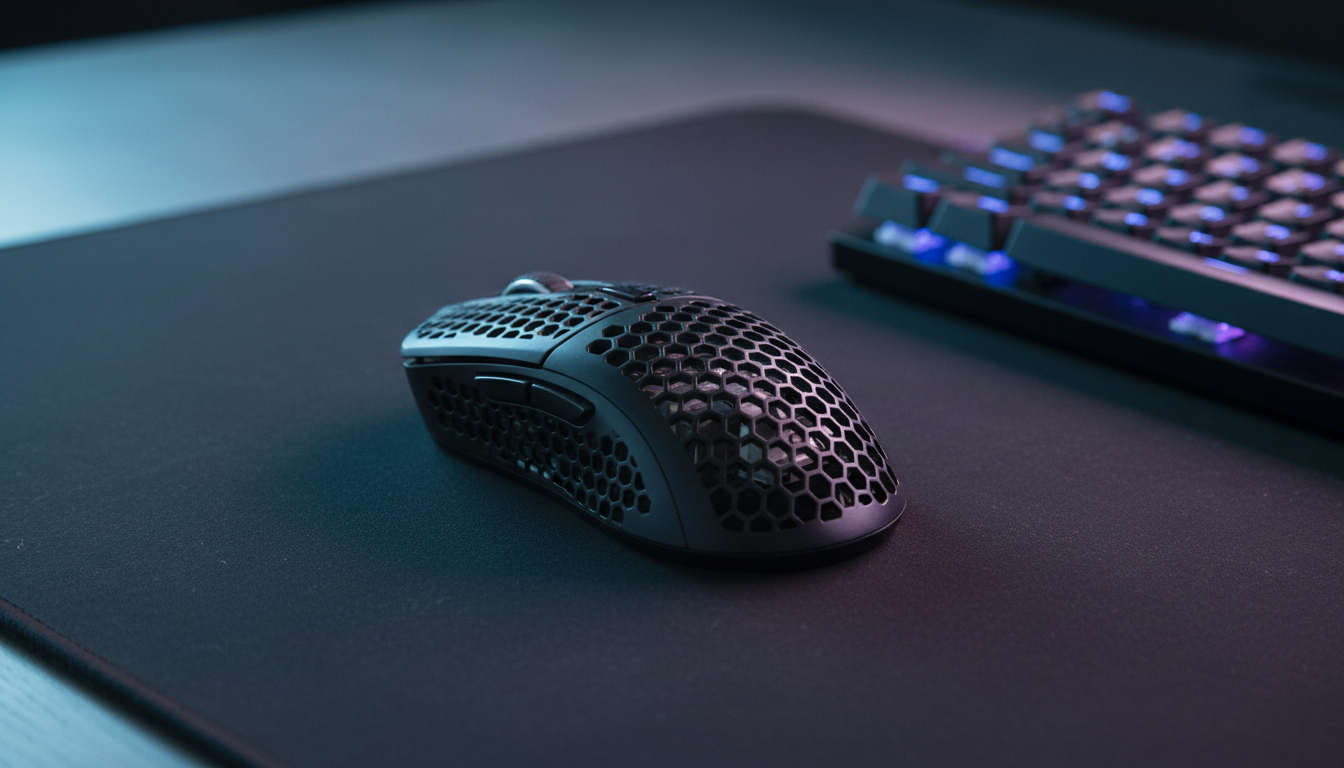
The defining feature is the shell. Instead of plastic with holes punched in it, Razer machines the top and sides from magnesium alloy, then polishes and paints the metal. The result is an open lattice that looks almost skeletal, and it feels much stiffer than the flexible plastic honeycomb mice that were popular a few years ago. Windows Central called it a strong, rigid foundation and noted that it’s “literally metal.” The bottom plate and side buttons use plastic.
The concave main buttons cradle your fingertips, and the sides curve inward to give your thumb and ring finger a secure place to grip. At 119 millimeters long and 39 millimeters tall, it’s a small, low mouse. It suits small to medium hands in a claw or fingertip grip best. Players with large hands can still fingertip it, but a palm grip will feel cramped.
The shape leans right-handed, and both side buttons sit on the left. You can remap the main buttons in software, but left-handed players have no way to reach the side buttons comfortably. There’s also no red, green, and blue (RGB) lighting, which helps save weight and battery.
The honeycomb tradeoff
Open shells collect dust, skin oils, and crumbs, and they offer little protection against a spilled drink. Windows Central flagged the lack of a barrier between the outside world and the electronics as a real risk. Razer includes a microfiber cloth and alcohol prep pads for cleaning, but a small air blower makes it easier to clear out the gaps.
Buttons, scroll wheel, and feet
Razer’s third-generation optical switches register clicks with a beam of light instead of a metal contact. That design avoids the double-clicking problems that worn mechanical switches can develop, and Razer rates them for 90 million clicks. Reviewers describe the main clicks as crisp with moderate noise, while the side buttons feel softer and quieter.
The mouse ships with polytetrafluoroethylene (PTFE) feet installed, plus a set of Corning Gorilla Glass 3 feet in the box. Glass feet glide with very low friction and resist wear, but Razer intends them for soft cloth pads only, since they can scratch or chatter on hard surfaces. A smooth cloth pad such as a large cloth gaming mouse pad is the best match. Razer also includes a grip tape set for extra traction.
Sensor, polling rate, and performance
Inside sits the Razer Focus Pro 30K optical sensor, the same sensor Razer used in its flagship Viper V2 Pro and DeathAdder V3 Pro at the time. It tracks up to 30,000 DPI and 750 IPS, with 99.8% resolution accuracy according to Razer. Few players use anything near that maximum: most competitive first-person shooter (FPS) players stick to 400 to 1,600 DPI.
The bigger story is the polling rate. The included HyperPolling dongle lets the mouse report its position up to 4,000 times per second wirelessly, four times the usual 1,000Hz. Higher polling makes cursor movement look smoother on high refresh rate monitors and shaves a fraction of a millisecond off input delay. The benefit is real but small. At 4,000Hz, the mouse also leans harder on your processor, so older or budget personal computers (PCs) may see frame rate dips in some games. For most players, 1,000Hz remains plenty.
Windows Central praised its tracking and accuracy and called the buttons excellent. A switch on the underside lets you change DPI on the fly.
Battery life and charging
Razer rates the battery for up to 60 hours over its HyperSpeed wireless connection. That figure drops substantially when you run 4,000Hz polling, so plan to recharge more often if you use the highest setting. Razer doesn’t publish an official 4,000Hz battery figure.
Charging is a highlight. Razer uses a high 2C charge rate, which fills the battery in under 90 minutes. You can also plug in the USB-C cable and keep playing while it charges.
Software: Razer Synapse
You configure the mouse through Razer Synapse, now in its fourth generation (Synapse 4) on Windows. It lets you remap buttons, set DPI stages, change the polling rate, and save profiles to the mouse’s onboard memory so your settings follow you to other computers without the software installed. The dongle comes pre-paired, so setup takes seconds.
Pros and cons
Pros
- Extremely light at 49 grams
- Rigid, premium magnesium alloy shell
- Top-tier Focus Pro 30K sensor
- True 4,000Hz wireless polling out of the box
- Fast charging and a three-year warranty
- Glass feet and grip tape included
Cons
- Very expensive at $279.99 at launch
- Limited production and hard to find new
- Right-handed side buttons only
- Open shell collects dust and offers little spill protection
- Battery life drops noticeably at 4,000Hz
- Newer flagship mice match or beat it for less
Razer Viper Mini Signature Edition vs. current lightweight wireless mice
The Signature Edition’s sensor was flagship grade in 2023, but the market has moved on. Razer’s newer mice use Focus Pro 35K and 45K sensors with 8,000Hz polling, and they cost far less. Amazon is our main affiliate partner, and it carries most of the lightweight wireless gaming mice worth comparing:
Compare similar lightweight wireless gaming mice on Amazon
| Mouse | Weight | Max polling rate | Best for | Shop |
|---|---|---|---|---|
| Razer Viper Mini Signature Edition | 49 grams | 4,000Hz | Collectors who want a metal shell | Check price |
| Razer Viper V3 Pro | 54 grams | 8,000Hz | Competitive FPS players | Check price |
| Logitech G Pro X Superlight 2 | 60 grams | 8,000Hz | A proven all-rounder with long battery life | Check price |
| Razer DeathAdder V4 Pro | 56 grams | 8,000Hz | Ergonomic right-handed grip | Check price |
| Razer DeathAdder V3 Pro | 63 grams | 4,000Hz (with dongle) | Ergonomic shape at a discount | Check price |
| Razer Viper V3 HyperSpeed | 82 grams | 8,000Hz | Budget wireless gaming | Check price |
- Razer Viper V3 Pro: The closest modern replacement. It’s a symmetrical, solid-shell esports mouse at 54 grams with a newer sensor and 8,000Hz polling, and it typically sells for about $160. See the Razer Viper V3 Pro on Amazon.
- Logitech G Pro X Superlight 2: A favorite among pro players, with a 60-gram solid shell and roughly 90 hours or more of battery life according to PCGamesN. See the Superlight 2 on Amazon.
- Razer DeathAdder V4 Pro: Razer’s latest ergonomic flagship weighs 56 grams and uses the Focus Pro 45K sensor. PCGamesN lists up to 150 hours of battery life at 1,000Hz. See the DeathAdder V4 Pro on Amazon.
- Razer Viper V3 HyperSpeed: At around $60 to $70, it’s the value pick. It’s heavier at 82 grams because it runs on a single AA battery, but PCGamesN reports up to 280 hours of use at 1,000Hz. See the Viper V3 HyperSpeed on Amazon.
Prices change often, so check current listings before you buy. If you’re shopping for someone else, our unique gifts for gamers guide has more ideas.
Who should buy the Razer Viper Mini Signature Edition?
Buy it if you collect premium peripherals, have small to medium hands, prefer a claw or fingertip grip, and want something genuinely different on your desk. Its metal build and 49-gram weight remain unusual even in 2026.
Skip it if you want the best performance per dollar, have large hands, play left-handed, or eat and drink at your desk. A Viper V3 Pro or Superlight 2 gives you equal or better tracking, longer battery life, and a sealed shell for much less money.
Frequently asked questions
How much does the Razer Viper Mini Signature Edition weigh?
The Razer Viper Mini Signature Edition weighs 49 grams, which made it Razer’s lightest mouse at launch.
Is the Razer Viper Mini Signature Edition discontinued?
New units of the Razer Viper Mini Signature Edition are hard to find. Razer sold it in limited production runs on Razer.com rather than through regular retail, so new stock appears rarely. Most buyers now find it through resellers or secondhand listings.
Does the Viper Mini Signature Edition support 8,000Hz polling?
No, the Viper Mini Signature Edition doesn’t support 8,000Hz polling. It tops out at 4,000Hz wireless polling with the included HyperPolling dongle. Newer Razer flagships such as the Viper V3 Pro support 8,000Hz.
Can you use the Gorilla Glass feet on any mouse pad?
No, the Gorilla Glass feet aren’t meant for every mouse pad. Razer designed the glass feet for soft cloth pads. On hard or glass pads, stick with the preinstalled PTFE feet.
Final verdict
The Razer Viper Mini Signature Edition is a showcase of what a mouse can be when cost is no object: a machined metal shell, 49 grams, a flagship sensor, and 4,000Hz wireless polling. It still performs at a high level, but it was always a luxury item, and newer mice now deliver better specs for roughly half the price. Buy it as a collectible if you love the design and can find a good unit; otherwise, a modern Viper V3 Pro or Superlight 2 is the smarter choice. Check the current Razer Viper Mini Signature Edition price on Amazon.