
Home Tech Land is reader-supported. When you buy through links on our site, we may earn a commission. As an Amazon Associate, we earn from qualifying purchases.
Last updated: . How we research: We compare manufacturer specs with published lab measurements and owner reports; we don’t test products in person. Learn more about Home Tech Land.
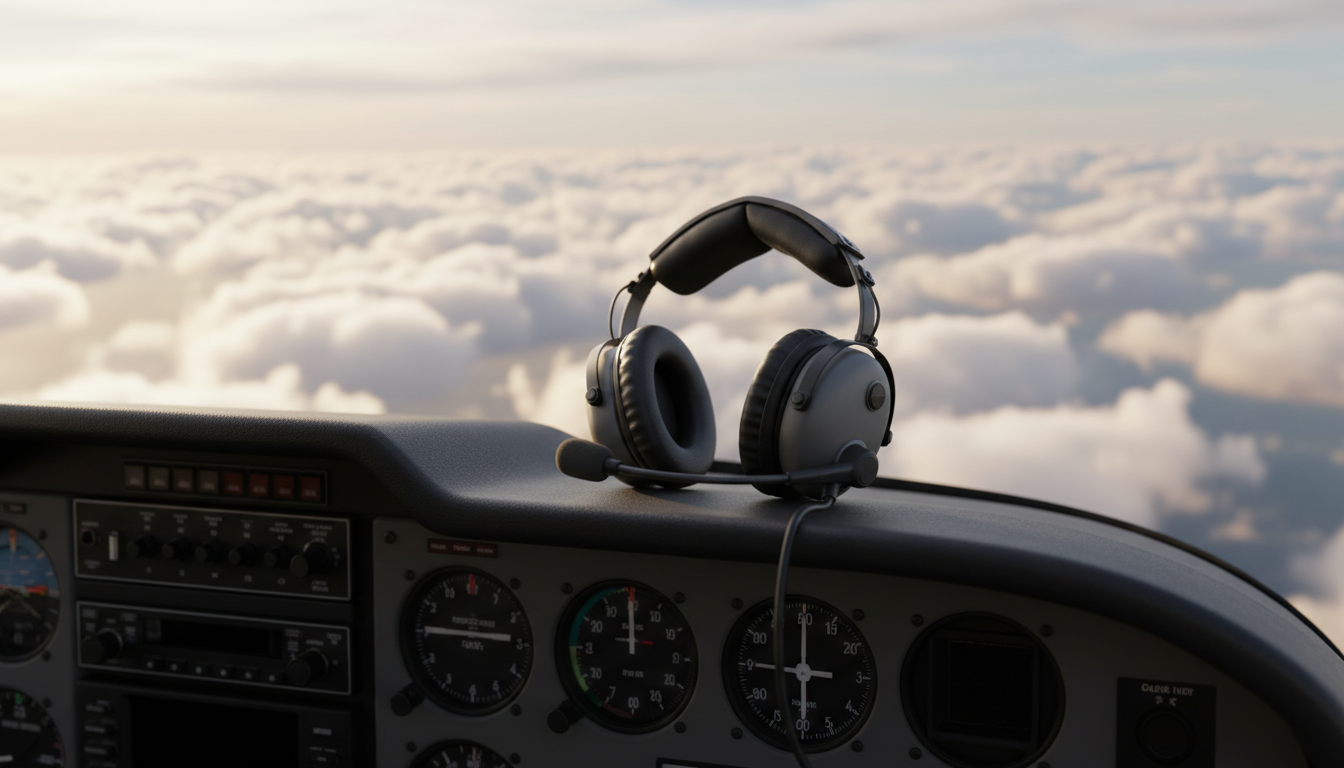
The Bose A30 is Bose’s flagship aviation headset, and it’s one of the most comfortable premium aviation headsets you can buy in 2026. It replaces the Bose A20, which pilots relied on for 14 years before Bose discontinued it. Bose launched the A30 at Sun ‘n Fun in March 2023 with digital active noise reduction (ANR), three selectable noise modes, tap-to-talk-through, Bluetooth audio, and a lighter clamp on your head. This Bose A30 review covers comfort, noise reduction, Bluetooth, certification, and battery life, and it compares the A30 with the best alternatives on Amazon, from the Lightspeed Delta Zulu to budget headsets for student pilots.
Quick verdict: The Bose A30 is one of the most comfortable premium aviation headsets you can buy, with excellent noise reduction, clear radio audio, and smart features like tap control talk-through and a toolless microphone swap. It costs about $1,299 and lacks the carbon monoxide (CO) detector you get on the Lightspeed Delta Zulu, but pilots who fly long legs will appreciate the lighter clamping force. Check the Bose A30 price on Amazon.
Key takeaways
- What it is: A digital ANR aviation headset that Bose launched in March 2023 with three noise modes, tap control talk-through, and Bluetooth.
- Who it’s for: Pilots who fly long legs, wear glasses or a cap, or find older headsets too tight. It clamps with about 360 grams of force, roughly 20% less than the A20.
- Price: It launched at $1,249 and lists for $1,299 as of November 2026. Prices change often.
- Main weaknesses: It’s expensive, it lacks a carbon monoxide detector, and it runs on AA batteries rather than a built-in rechargeable pack.
- Status: Bose has discontinued the A20, so the A30 is now Bose’s current aviation headset.
Bose A30 at a glance
| Spec | Bose A30 |
|---|---|
| Type | Over-ear (circumaural) active noise reduction (ANR) aviation headset |
| Noise modes | Three: Low, Medium, and High |
| Talk-through | Tap control: double-tap an ear cup to hear outside sound |
| Weight | About 14.2 oz (A20: about 14.4 oz) |
| Clamping force | About 360 grams, roughly 20% less than the A20 |
| Battery | Two AA batteries, at least 45 hours (25+ hours with continuous Bluetooth use) |
| Bluetooth | Yes, with audio mixing or muting under radio traffic |
| Plug options | Dual general aviation (GA) plugs, 6-pin LEMO panel power, U-174 (helicopter), and 5-pin Airbus |
| Certification | Federal Aviation Administration (FAA) Technical Standard Order (TSO) and European Union Aviation Safety Agency (EASA) E/TSO-C139a |
| Firmware | Updatable through a micro-B Universal Serial Bus (USB) port on the control module |
| List price | $1,299 (launched at $1,249) |
Specs come from Bose’s official A30 page, AIN’s launch coverage, and Kitplanes’ review.
Design and comfort
At first glance, the A30 looks like a familiar Bose aviation headset: soft over-ear cushions, a slim headband, and an inline control module. Bose didn’t chase carbon fiber or a radical new look. Instead, it focused on the things pilots feel after three hours in the left seat.
The biggest change is clamping force. Bose redesigned the aluminum headband and weight distribution, and according to AIN, the A30 presses with about 360 grams of force compared with roughly 450 grams on the A20. That’s about 20% less squeeze. The A30 also weighs a touch less (about 14.2 oz versus 14.4 oz), and Kitplanes notes that a contoured fabric headband pad replaces the A20’s sheepskin. Kitplanes also calls the headset “ballcap friendly,” which matters if you fly with a cap.
Owners and reviewers consistently rank comfort as the A30’s strongest trait. In a Sporty’s comparison, six pilots who had flown both the A30 and the Lightspeed Delta Zulu preferred the A30 for comfort, though fit is personal.
The microphone and cable can move from the left ear cup to the right without tools. You open two latches at the mic base, lift the boom out, and reinstall it on the other side. Kitplanes says the swap takes less than a minute, which flight instructors and first officers who switch seats will appreciate.
Digital active noise reduction
Bose introduced the first active noise reduction aviation headset more than three decades ago, and the A30 moves that technology to a digital chipset. The basic idea stays the same: microphones sample cockpit noise, and the headset produces opposing sound waves to cancel it. The digital design draws less power, and Bose can improve it later with firmware updates.
The A30 gives you three noise modes:
- High: The strongest reduction, which Bose aims at radio communication and loud cabins. Kitplanes expects most piston pilots to leave it here.
- Medium: The most consistent reduction across a wide frequency range, according to Bose.
- Low: Lets more sound in so you can talk with crew or passengers who don’t have an intercom connection.
Reviewers rate the noise reduction and audio quality as excellent. Some owners report less background hiss than the analog A20. Sporty’s called the ANR performance a tie with the Lightspeed Delta Zulu but gave the A30 the edge on radio clarity, noting that its noise-cancelling mic sounded clear without adjustment.
Tap control talk-through
Tap control lets you hear the outside world without lifting an ear cup. Double-tap either ear cup to drop ANR on that side, and double-tap again to restore it. It’s handy for chatting with a line attendant, a passenger without a headset, or a crew member in a noisy hangar.
Bose ships this feature switched off to prevent accidental activation. You turn it on with a small switch inside the battery compartment, and Kitplanes notes that the ANR mode must be set to High or Medium for talk-through to work.
Bluetooth and audio features
The A30 includes Bluetooth on most versions. According to Kitplanes, it remembers up to eight devices, connects to two at once, and gives you dedicated Bluetooth volume controls on the control module. A switch lets you choose whether Bluetooth audio mutes, mixes, or stays on when radio traffic comes in, so music or electronic flight bag (EFB) alerts won’t step on air traffic control (ATC). Full-duplex phone calls also work through the headset.
Bose tunes the Bluetooth audio path separately from the intercom path with its own active equalizer (EQ). The headset also supports stereo or mono intercoms, although Kitplanes found the stereo and mono switch awkwardly placed inside the control module under the batteries.
Battery life and power
Battery-powered versions run on two AA batteries and last at least 45 hours in typical aircraft noise, according to Bose. Continuous Bluetooth use drops that to 25 or more hours. That’s excellent, but not unmatched: David Clark rates its DC ONE-XP at up to 50 hours. A battery light warns you when it’s time to swap cells, and it’s smart to keep spares in your flight bag.
If you fly an aircraft with a 6-pin LEMO jack, the panel-powered version draws power from the airplane and switches to batteries automatically if you unplug it. Bose also sells U-174 versions for helicopters and military aircraft and 5-pin versions for Airbus cockpits.
Certification and FAA facts
Bose lists the A30 as FAA TSO and EASA E/TSO-C139a certified. TSO-C139a is the standard for aircraft audio equipment, including headsets, so the certification confirms the A30 meets those requirements. The FAA doesn’t require general aviation pilots to use a TSO-certified headset, but many flight schools, charter operators, and corporate flight departments prefer or require one. If you fly professionally, check your operator’s policy before you buy.
Pros and cons
Pros
- About 20% less clamping force than the A20, which makes long flights more comfortable
- Excellent noise reduction with three selectable modes
- Tap control talk-through
- Clear microphone and radio audio
- Bluetooth with mute or mix priority and two-device connection
- Toolless left-to-right microphone swap
- At least 45 hours on two AA batteries
- FAA TSO and EASA E/TSO-C139a certified
Cons
- Expensive at about $1,299
- No carbon monoxide detector
- Stereo and mono switch sits in an awkward spot
- Uses AA batteries rather than a built-in rechargeable pack
Bose A30 vs. other aviation headsets
Amazon is our main affiliate partner, and it carries the Bose A30 along with premium and budget aviation headsets. Prices, plug types, and stock vary by seller, so confirm you’re ordering the right plug (dual GA, LEMO, or U-174) for your aircraft.
Compare similar aviation headsets on Amazon
| Headset | Weight | Battery life | Best for | Shop |
|---|---|---|---|---|
| Bose A30 | About 14.2 oz | 45+ hours (2 AA) | Comfort on long flights | Check price |
| Lightspeed Delta Zulu | About 14.9 oz | About 30 hours (rechargeable) | Built-in carbon monoxide (CO) detector | Check price |
| David Clark DC ONE-XP | About 12.3 oz | Up to 50 hours | Lightweight build and long battery life | Check price |
| Lightspeed Zulu 3 | About 14.6 oz | About 40 hours | Premium ANR for less | Check price |
| Faro G2 ANR | About 13 oz | Up to 30 hours | Budget ANR for student pilots | Check price |
| Rugged Air ANR headsets | Varies | Varies | Low-cost backup or passenger headset | Check price |
Weights and battery figures come from PilotMall’s headset comparison chart and manufacturer specs.
- Lightspeed Delta Zulu: The A30’s closest rival matches its noise reduction and adds a carbon monoxide sensor, a rechargeable battery, and a seven-year warranty. Sporty’s found it slightly less comfortable than the A30. See the Lightspeed Delta Zulu on Amazon.
- David Clark DC ONE-XP: David Clark’s flagship weighs less than the A30 and runs up to 50 hours, a strong pick if you want a lighter headset from a long-trusted brand. See the David Clark DC ONE-XP on Amazon.
- Lightspeed Zulu 3: This model costs several hundred dollars less than the Delta Zulu and still delivers premium ANR and Bluetooth. See the Lightspeed Zulu 3 on Amazon.
- Faro and Rugged Air: Budget ANR headsets cost a fraction of the A30’s price. They’re heavier and less refined, but they work well for student pilots, occasional flyers, and passenger headsets. See budget ANR aviation headsets on Amazon.
The Bose A20 is no longer in production. You may still find leftover or used units, but the A30 is now Bose’s current aviation headset, and Bose continues to service A20 owners.
Accessories worth adding
- Headset bag: A padded bag protects a $1,299 headset in your flight bag or baggage compartment. Shop aviation headset bags on Amazon.
- Plug adapters: If you fly different aircraft, a LEMO to dual GA adapter lets one headset work across panel-powered and standard jacks. Shop aviation headset adapters on Amazon.
- Spare AA batteries: Keep a fresh set in your bag so a low battery never cuts your ANR mid-flight. Shop AA batteries on Amazon.
Who should buy the Bose A30?
Buy the Bose A30 if you fly long legs, wear glasses or a cap, or found older headsets too tight after a couple of hours. It’s also a smart upgrade for A20 owners who want Bluetooth with smarter audio priority, a lighter clamp, and tap control talk-through. Choose the Lightspeed Delta Zulu if a built-in CO detector and rechargeable battery matter more to you than comfort, and choose a budget ANR headset if you’re still in training or fly only a few hours a month.
Frequently asked questions
Is the Bose A30 TSO certified?
Yes, the Bose A30 is TSO certified. Bose lists the A30 as FAA TSO and EASA E/TSO-C139a certified.
How long do the Bose A30 batteries last?
The Bose A30 batteries last at least 45 hours on two AA batteries in typical aircraft noise, according to Bose, or 25 or more hours with continuous Bluetooth use. Panel-powered LEMO versions run on aircraft power.
Is the Bose A30 better than the A20?
Yes, the Bose A30 is better than the A20 for most pilots. The A30 clamps with about 20% less force, weighs slightly less, adds three ANR modes and tap control talk-through, and uses a digital ANR chipset that Bose can update. Bose has also discontinued the A20.
Does the Bose A30 have a carbon monoxide detector?
No, the Bose A30 doesn’t have a carbon monoxide detector. If you want built-in CO detection, look at the Lightspeed Delta Zulu, or install a dedicated CO detector in your aircraft.
Final verdict
The Bose A30 is a worthy successor to the A20. It keeps everything pilots liked about Bose aviation headsets, then adds a gentler clamp, three noise modes, tap control talk-through, and smarter Bluetooth. It’s expensive and skips the CO detector some rivals include, but if comfort and clear communication top your list, it’s one of the best aviation headsets you can buy in 2026. Check the current Bose A30 price on Amazon.